DonateMembershipVisit Heritage
  • Tūrangawaewae
    Places
  • Tira Māori
    Māori Heritage
  • Poutairangahia
    Archaeology
  • Rauemi
    Resources
  • Mō Tātou
    About Us
  • New Zealand Heritage List
  • Nominate and submit
  • Explore the List
  • National Historic Landmarks
  • Plaques
  • Rainbow List Project
  • Lost heritage
  • Visit Heritage
  • Our properties
  • Turnbull House Project
  • Collections
  • Shop
  • Tohu Whenua
  • Tira Māori
  • Conserving Māori heritage
  • Marae built heritage
  • Māori heritage on the List
  • Hinemihi—Te Hokinga Mai
  • What is archaeology?
  • Is there a site on my property?
  • What are my legal requirements?
  • Affecting an archaeological site
  • Declaring an archaeological site
  • Archaeology FAQs
  • Archaeology Digital Library
  • Archaeology guidelines and templates
  • Resources
  • Funding
  • Publications
  • Sustainable management guides
  • Disaster recovery
  • Podcasts & digital resources
  • Education Hub
  • Conservation plans
  • About
  • Board
  • Māori Heritage Council
  • Senior Staff
  • Offices
  • Contact us
  • Careers
  • Covenants
  • Fast-track
  • Corporate documents
  • Currently consulting on
  • Our submissions
  • News
  • Covid-19 response
Quick links
Rārangi Kōrero | The List
Explore the List
National Historic Landmarks
Ngā Manawhenua o Aotearoa me ōna Kōrero Tūturu
Quick links
Tapuwae
A Vision for Places of Māori Heritage
Funding for Māori Heritage
Resources
Quick links
Archaeological Authority Portal
Applying for an archaeological authority
Archaeology FAQs
Browse the most frequently asked questions about archaeological authorities and the archaeological process.
Quick links
Quick links
News
News Keep up to date with Heritage New Zealand Pouhere Taonga
Membership
Membership Find out more and sign up today
DonateMembershipVisit Heritage
  • Tūrangawaewae
    Places
  • Tira Māori
    Māori Heritage
  • Poutairangahia
    Archaeology
  • Rauemi
    Resources
  • Mō Tātou
    About Us
  • New Zealand Heritage List
  • Nominate and submit
  • Explore the List
  • National Historic Landmarks
  • Plaques
  • Rainbow List Project
  • Lost heritage
  • Visit Heritage
  • Our properties
  • Turnbull House Project
  • Collections
  • Shop
  • Tohu Whenua
  • Tira Māori
  • Conserving Māori heritage
  • Marae built heritage
  • Māori heritage on the List
  • Hinemihi—Te Hokinga Mai
  • What is archaeology?
  • Is there a site on my property?
  • What are my legal requirements?
  • Affecting an archaeological site
  • Declaring an archaeological site
  • Archaeology FAQs
  • Archaeology Digital Library
  • Archaeology guidelines and templates
  • Resources
  • Funding
  • Publications
  • Sustainable management guides
  • Disaster recovery
  • Podcasts & digital resources
  • Education Hub
  • Conservation plans
  • About
  • Board
  • Māori Heritage Council
  • Senior Staff
  • Offices
  • Contact us
  • Careers
  • Covenants
  • Fast-track
  • Corporate documents
  • Currently consulting on
  • Our submissions
  • News
  • Covid-19 response
Quick links
Rārangi Kōrero | The List
Explore the List
National Historic Landmarks
Ngā Manawhenua o Aotearoa me ōna Kōrero Tūturu
Quick links
Tapuwae
A Vision for Places of Māori Heritage
Funding for Māori Heritage
Resources
Quick links
Archaeological Authority Portal
Applying for an archaeological authority
Archaeology FAQs
Browse the most frequently asked questions about archaeological authorities and the archaeological process.
Quick links
Quick links
News
News Keep up to date with Heritage New Zealand Pouhere Taonga
Membership
Membership Find out more and sign up today
  • Places
  • Nominate and submit
  • National Historic Landmarks
  • Places
  • Nominate and submit
  • National Historic Landmarks
  • Tira Māori
  • Conserving Māori heritage
  • Marae built heritage
  • Tira Māori
  • Conserving Māori heritage
  • Marae built heritage
  • Archaeological authorities
  • Archaeology Digital Library
  • Archaeological authorities
  • Archaeology Digital Library
  • All resources
  • Publications
  • Funding
  • All resources
  • Publications
  • Funding
  • FAQs
  • FAQs
Follow us on:
Places
  • Places
  • Nominate and submit
  • National Historic Landmarks
Tira Māori
  • Tira Māori
  • Conserving Māori heritage
  • Marae built heritage
Archaeology
  • Archaeological authorities
  • Archaeology Digital Library
Resources
  • All resources
  • Publications
  • Funding
FAQs
  • FAQs
Follow us on
HomePrivacyTerms and conditionsAbout this site
© Heritage New Zealand Pouhere Taonga 2026.
 
Wellington Harbour Board Head Office and Bond Store

2-3 Jervois Quay and Queens Wharf, WELLINGTON

Public

Historic Place Category 1

List No. 234

Quick links:
List GalleryLocationDetails
The Wellington Harbour Board Head Office and Bond Store is a symbol of the successful development of Wellington's Port for almost a century.

In 1880 the Harbour Board was established to ensure that profits made from shipping were channelled back into shipping through the development of Wellington's harbour facilities. Shipping was then the primary means of transporting goods to, from, and around the country, and trade depended on safe harbours that were well equipped for the loading, unloading and storage of freight. When the new Board acquired control of Queen's Wharf in 1882, it began erecting wharves and warehouses on reclaimed land that would accommodate the needs of the steamships docking at the harbour. By 1889 it had spent £217,975 on improvements and, despite the severe economic depression and a policy of keeping port charges low, in the following year the Board was able to commission the renowned, Wellington-based architect Frederick de Jersey Clere to design an impressive head office on the waterfront. Incorporated into the building would be a new, larger bond store, a stronghold where the goods transferred from the ships were stored until importers had paid a duty tax to the Harbour Board.

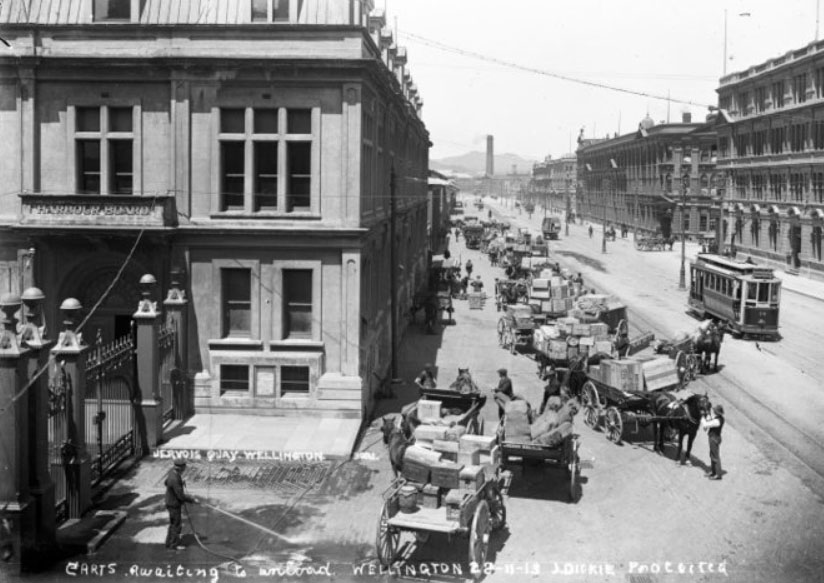
The 'Bond Store' was completed for £11,264 in 1892 by Robert Carmichael and Son on land reclaimed from the harbour just three years earlier. Unlike most of the original wharf buildings, the Bond Store is made of concrete. This minimised the risk of fire and prevented enterprising thieves from drilling up into the floor to steal liquor, as had happened at the timber 'Queen's Bond' building that the new store was to replace. Clere's design for the building was inspired by the French Second Empire style then popular in Britain. The mansard roof typical of the style allowed the attic space of the Bond Store to be used as a third storey. The building lacks the lavish ornamentation commonly associated with the style, giving it the appearance of a more modern building. The Queen's Wharf end of the building was used as office space by the Harbour Board. Designed to give an appearance of strength and wealth, it includes an elegant entrance and a masterfully carved staircase. The bond store took up the remainder of the 57 metre (186 foot) long building. Goods were brought into the store through three large cart entrances and transported to various floors by hydraulic lifts and jiggers installed by the engineering company, Luke and Sons. At almost twice the size of the original Queen's Bond, the Wellington Harbour Board Head Office and Bond Store demonstrated the extent to which trade had expanded under the Harbour Board's administration of the port.

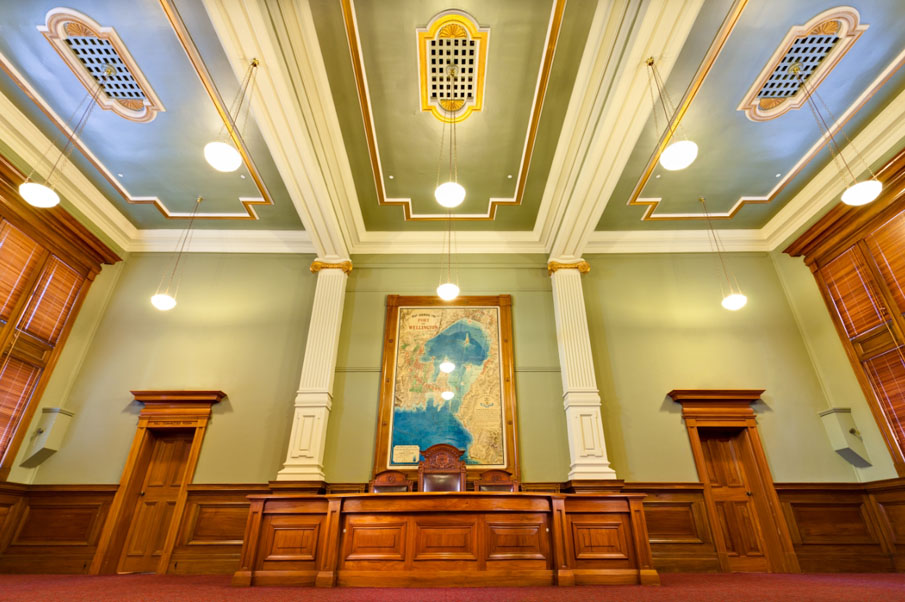
Wellington Harbour Board staff moved into the building in late 1892. The Board continued its reclamation of the harbour and commissioned numerous architecturally-designed warehouses along Wellington's prosperous waterfront. Following the completion of Queen's Wharf in 1925, the growing Board commissioned Chief Engineer James Marchbanks to design a larger, more imposing boardroom to replace the one designed by Clere. This was completed in 1926. Space was found for surplus bonded goods in other sheds on the waterfront. The importance of the Board was reflected in the highly influential men who both appointed and elected to serve upon it, including future prime ministers Peter Fraser (1884-1950) and Walter Nash (1882-1968). In 1951 the Board became involved in New Zealand's bitterest industrial dispute, the Watersiders' Strike, locking workers out of the port and banning overtime. The 'wharfies' were forced back to work after 151 days. Yet from the 1950s, the increasing use of container ships and competition with the road and rail lessened the commercial importance of Wellington's harbour. The Bond Store ceased to be used from 1954 and was eventually converted into a maritime museum. In 1989, the Harbour Board ceased to exist after a substantial restructuring of the local government. Their building was saved by the popularity of its museum. The Bond Store was reopened as Wellington's Museum of City and Sea in 1999 following careful restoration.

The Wellington Harbour Board Head Office and Bond Store is of historical significance as a symbol of success of the Wellington's Harbour Board. The Board was responsible for extensive development of the harbour at a time when shipping was crucial to trade and the building is a monument to them. The grandeur of the offices and boardroom indicates their former importance. The size of the Bond Store points to the extent to which the trade had expanded and its incorporation into the Head Office building highlights the Board's control over the goods coming into the Harbour. The building is also significant for its connection to eminent New Zealanders and events such as the 1951 Watersiders' Strike. The building is architecturally noteworthy as an example of the work of New Zealand architect Frederick de Jersey Clere, a pioneer in reinforced concrete construction. Now the second oldest building on the waterfront, the building has immense cultural significance as a storehouse of Wellington City's history.
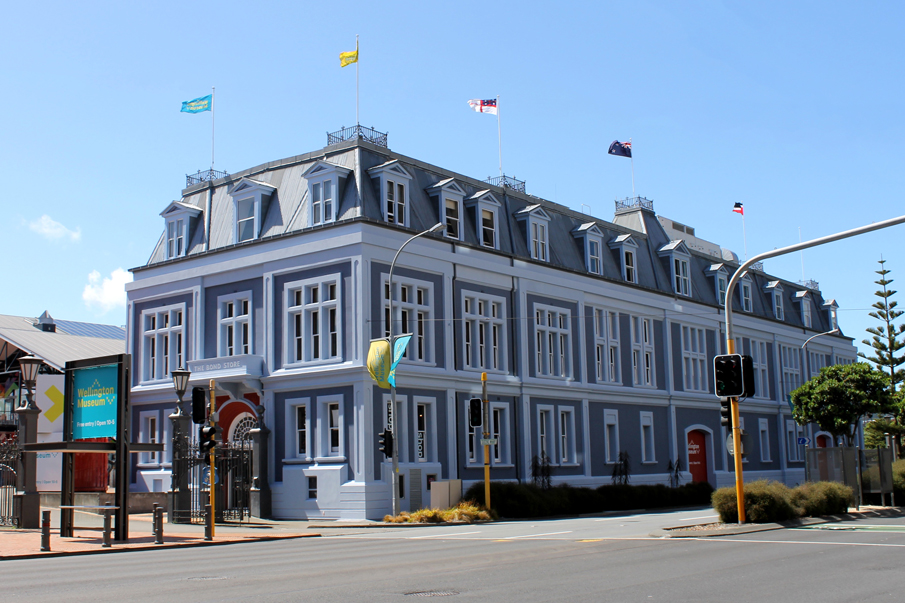
Wellington Harbour Board Head Office and Bond Store - now called Wellington Museum was designed by Frederick de Jersey Clere. Image courtesy of Wellington Museum | 23/12/2015 | Wellington Museum
Wellington Harbour Board Head Office and Bond Store - now called Wellington Museum. Interior showing former Board Room taken February 2013. Image courtesy of Wellington City and Sea and Pikitia | Wellington Museum
Wellington Harbour Board Head Office and Bond Store - now called Wellington Museum. Drays waiting to unload, outside the Queen's Wharf gates, Jervois Quay, Wellington. Dickie, John, 1869-1942 :Collection of postcards, prints and negatives. Ref: 1/2-004031-G. http://natlib.govt.nz/records/23211027. Permission of the Alexander Turnbull Library, Wellington, New Zealand, must be obtained before any re-use of this image | John Dickie | 22/11/1913 | Alexander Turnbull Library Wellington
Wellington Harbour Board Head Office and Bond Store - now called Wellington Museum was designed by Frederick de Jersey Clere. Image courtesy of Wellington Museum | 23/12/2015 | Wellington Museum
Wellington Harbour Board Head Office and Bond Store - now called Wellington Museum. Interior showing former Board Room taken February 2013. Image courtesy of Wellington City and Sea and Pikitia | Wellington Museum
Wellington Harbour Board Head Office and Bond Store - now called Wellington Museum. Drays waiting to unload, outside the Queen's Wharf gates, Jervois Quay, Wellington. Dickie, John, 1869-1942 :Collection of postcards, prints and negatives. Ref: 1/2-004031-G. http://natlib.govt.nz/records/23211027. Permission of the Alexander Turnbull Library, Wellington, New Zealand, must be obtained before any re-use of this image | John Dickie | 22/11/1913 | Alexander Turnbull Library Wellington

List Entry Information

Overview

Status
Listed

List Entry Status
Historic Place Category 1

Access
Able to Visit

List Number
234

Date Entered
18th March 1982

Date of Effect
18th March 1982

City/District Council
Wellington City

Region
Wellington Region

Legal description

Lot 207 DP 67374 (RT 36D/598), Wellington Land District

Detailed List Entry

Construction Professional

Name

Clere, Frederick De Jersey

Type

Architect

Biography

Clere (1856-1952) was born in Lancashire, the son of an Anglican clergyman, and was articled to Edmund Scott, an ecclesiastical architect of Brighton. He then became chief assistant to R J Withers, a London architect. Clere came to New Zealand in 1877, practising first in Feilding and then in Wanganui. He later came to Wellington and practised there for 58 years. He was elected a Fellow of the Royal Institute of British Architects in 1886 and held office for 50 years as one of four honorary secretaries in the Empire. In 1883 he was appointed Diocesan Architect of the Anglican Church; he designed more than 100 churches while he held this position. Clere was a pioneer in reinforced concrete construction; the outstanding example of his work with this material is the Church of St Mary of the Angels (1922), Wellington. As well as being pre-eminent in church design, Clere was responsible for many domestic and commercial buildings including Wellington's Harbour Board Offices and Bond Store (1891) and Overton in Marton. Clere was also involved in the design of large woolsheds in Hawkes Bay and Wairarapa. He was active in the formation of the New Zealand Institute of Architects and served on their council for many years. He was a member of the Wellington City Council until 1895, and from 1900 a member of the Wellington Diocesan Synod and the General Synod. He was also a member of the New Zealand Academy of Fine Arts.

Name

Edmund Platt

Type

Plasterer

Biography

No biography is currently available for this construction professional

Construction Details

Start Year

1892

Type

Original Construction

Start Year

1904

Type

Addition

Description

Steel joists added to top of building

Start Year

1925

Finish Year

1926

Type

Modification

Description

Board room and committee alterations

Start Year

1958

Type

Modification

Description

Roof replaced with asbestos

Start Year

1967

Type

Modification

Description

New committee room added to the south of the boardroom

Start Year

1972

Type

Modification

Description

Building converted into a museum

Start Year

1942

Finish Year

1943

Type

Structural upgrade

Description

Re-strengthening of the building

Start Year

1988

Finish Year

1991

Type

Restoration

Description

Restoration and redevelopment

Start Year

2016

Finish Year

2016

Type

Refurbishment/renovation

Description

New attic exhibition space opened after extensive refurbishment

Period

2010

Construction Materials

The building is constructed of cement and brickwork and has timber flooring and interior framing

Notable Features

The iron railings on the roof of the building The hoist room

Reference

Completion Date

5th December 2002

Report Written By

Rebecca O'Brien

Information Sources

Johnson, 1996

David Johnson, Wellington Harbour, Wellington, 1996

Morrow, 2000

D. Morrow, The Bondstore; Storehouse of Wellington History, Wellington, 2000

Museum of City and Sea

Museum of City and Sea, URL:http://www.bondstore.co.nz

Report Written By

This place was identified as significant under previous legislation with different information requirements. It remains significant under the current legislation. There is opportunity under our legislation and policies to add to this information. Further information about this place may be available from the Central Regional Office of Heritage New Zealand Pouhere Taonga. A fully referenced version of this report is available from the NZHPT Central Region Office Please note that entry on the New Zealand Heritage List/Rarangi Korero identifies only the heritage values of the property concerned, and should not be construed as advice on the state of the property, or as a comment of its soundness or safety, including in regard to earthquake risk, safety in the event of fire, or insanitary conditions.

Further Information

Current Usages

Uses: Civic Facilities

Specific Usage: Museum

Former Usages

General Usage:: Trade

Specific Usage: Office building/Offices

Themes

Web Links

description: Wellington Museum

url: http://www.museumswellington.org.nz/wellington-museum/

Overview

Status

Listed

List Entry Status

Historic Place Category 1

Access

Able to Visit

List Number

234

Date Entered

18th March 1982

Date of Effect

18th March 1982

City/District Council

Wellington City

Region

Wellington Region

Legal description

Lot 207 DP 67374 (RT 36D/598), Wellington Land District

Status

Listed

List Entry Status

Historic Place Category 1

Access

Able to Visit

List Number

234

Date Entered

18th March 1982

Date of Effect

18th March 1982

City/District Council

Wellington City

Region

Wellington Region

Legal description

Lot 207 DP 67374 (RT 36D/598), Wellington Land District

Construction Information

Construction Professional

Name

Clere, Frederick De Jersey

Type

Architect

Biography

Clere (1856-1952) was born in Lancashire, the son of an Anglican clergyman, and was articled to Edmund Scott, an ecclesiastical architect of Brighton. He then became chief assistant to R J Withers, a London architect. Clere came to New Zealand in 1877, practising first in Feilding and then in Wanganui. He later came to Wellington and practised there for 58 years. He was elected a Fellow of the Royal Institute of British Architects in 1886 and held office for 50 years as one of four honorary secretaries in the Empire. In 1883 he was appointed Diocesan Architect of the Anglican Church; he designed more than 100 churches while he held this position. Clere was a pioneer in reinforced concrete construction; the outstanding example of his work with this material is the Church of St Mary of the Angels (1922), Wellington. As well as being pre-eminent in church design, Clere was responsible for many domestic and commercial buildings including Wellington's Harbour Board Offices and Bond Store (1891) and Overton in Marton. Clere was also involved in the design of large woolsheds in Hawkes Bay and Wairarapa. He was active in the formation of the New Zealand Institute of Architects and served on their council for many years. He was a member of the Wellington City Council until 1895, and from 1900 a member of the Wellington Diocesan Synod and the General Synod. He was also a member of the New Zealand Academy of Fine Arts.

Name

Edmund Platt

Type

Plasterer

Biography

No biography is currently available for this construction professional

Construction Details

Start Year

1892

Type

Original Construction

Start Year

1904

Type

Addition

Description

Steel joists added to top of building

Start Year

1925

Finish Year

1926

Type

Modification

Description

Board room and committee alterations

Start Year

1958

Type

Modification

Description

Roof replaced with asbestos

Start Year

1967

Type

Modification

Description

New committee room added to the south of the boardroom

Start Year

1972

Type

Modification

Description

Building converted into a museum

Start Year

1942

Finish Year

1943

Type

Structural upgrade

Description

Re-strengthening of the building

Start Year

1988

Finish Year

1991

Type

Restoration

Description

Restoration and redevelopment

Start Year

2016

Finish Year

2016

Type

Refurbishment/renovation

Description

New attic exhibition space opened after extensive refurbishment

Period

2010

Construction Materials

The building is constructed of cement and brickwork and has timber flooring and interior framing

Notable Features

The iron railings on the roof of the building The hoist room

Construction Professional

Name

Clere, Frederick De Jersey

Type

Architect

Biography

Clere (1856-1952) was born in Lancashire, the son of an Anglican clergyman, and was articled to Edmund Scott, an ecclesiastical architect of Brighton. He then became chief assistant to R J Withers, a London architect. Clere came to New Zealand in 1877, practising first in Feilding and then in Wanganui. He later came to Wellington and practised there for 58 years. He was elected a Fellow of the Royal Institute of British Architects in 1886 and held office for 50 years as one of four honorary secretaries in the Empire. In 1883 he was appointed Diocesan Architect of the Anglican Church; he designed more than 100 churches while he held this position. Clere was a pioneer in reinforced concrete construction; the outstanding example of his work with this material is the Church of St Mary of the Angels (1922), Wellington. As well as being pre-eminent in church design, Clere was responsible for many domestic and commercial buildings including Wellington's Harbour Board Offices and Bond Store (1891) and Overton in Marton. Clere was also involved in the design of large woolsheds in Hawkes Bay and Wairarapa. He was active in the formation of the New Zealand Institute of Architects and served on their council for many years. He was a member of the Wellington City Council until 1895, and from 1900 a member of the Wellington Diocesan Synod and the General Synod. He was also a member of the New Zealand Academy of Fine Arts.

Name

Edmund Platt

Type

Plasterer

Biography

No biography is currently available for this construction professional

Construction Details

Start Year

1892

Type

Original Construction

Start Year

1904

Type

Addition

Description

Steel joists added to top of building

Start Year

1925

Finish Year

1926

Type

Modification

Description

Board room and committee alterations

Start Year

1958

Type

Modification

Description

Roof replaced with asbestos

Start Year

1967

Type

Modification

Description

New committee room added to the south of the boardroom

Start Year

1972

Type

Modification

Description

Building converted into a museum

Start Year

1942

Finish Year

1943

Type

Structural upgrade

Description

Re-strengthening of the building

Start Year

1988

Finish Year

1991

Type

Restoration

Description

Restoration and redevelopment

Start Year

2016

Finish Year

2016

Type

Refurbishment/renovation

Description

New attic exhibition space opened after extensive refurbishment

Period

2010

Construction Materials

The building is constructed of cement and brickwork and has timber flooring and interior framing

Notable Features

The iron railings on the roof of the building The hoist room

Reference

Historical and Associated Iwi / Hapū / Whānau

Completion Date

5th December 2002

Report Written By

Rebecca O'Brien

Information Sources

Johnson, 1996

David Johnson, Wellington Harbour, Wellington, 1996

Morrow, 2000

D. Morrow, The Bondstore; Storehouse of Wellington History, Wellington, 2000

Museum of City and Sea

Museum of City and Sea, URL:http://www.bondstore.co.nz

Other Information

This place was identified as significant under previous legislation with different information requirements. It remains significant under the current legislation. There is opportunity under our legislation and policies to add to this information. Further information about this place may be available from the Central Regional Office of Heritage New Zealand Pouhere Taonga. A fully referenced version of this report is available from the NZHPT Central Region Office Please note that entry on the New Zealand Heritage List/Rarangi Korero identifies only the heritage values of the property concerned, and should not be construed as advice on the state of the property, or as a comment of its soundness or safety, including in regard to earthquake risk, safety in the event of fire, or insanitary conditions.

Historical and Associated Iwi / Hapū / Whānau

Completion Date

5th December 2002

Report Written By

Rebecca O'Brien

Information Sources

Johnson, 1996

David Johnson, Wellington Harbour, Wellington, 1996

Morrow, 2000

D. Morrow, The Bondstore; Storehouse of Wellington History, Wellington, 2000

Museum of City and Sea

Museum of City and Sea, URL:http://www.bondstore.co.nz

Other Information

This place was identified as significant under previous legislation with different information requirements. It remains significant under the current legislation. There is opportunity under our legislation and policies to add to this information. Further information about this place may be available from the Central Regional Office of Heritage New Zealand Pouhere Taonga. A fully referenced version of this report is available from the NZHPT Central Region Office Please note that entry on the New Zealand Heritage List/Rarangi Korero identifies only the heritage values of the property concerned, and should not be construed as advice on the state of the property, or as a comment of its soundness or safety, including in regard to earthquake risk, safety in the event of fire, or insanitary conditions.

Further Information

Current Usages

Uses: Civic Facilities

Specific Usage: Museum

Former Usages

General Usage: Trade

Specific Usage: Office building/Offices

Web Links

description: Wellington Museum

url: http://www.museumswellington.org.nz/wellington-museum/

Current Usages

Uses: Civic Facilities

Specific Usage: Museum

Former Usages

General Usage: Trade

Specific Usage: Office building/Offices

Web Links

description: Wellington Museum

url: http://www.museumswellington.org.nz/wellington-museum/

Location

Loading
Stay up to date with Heritage this month